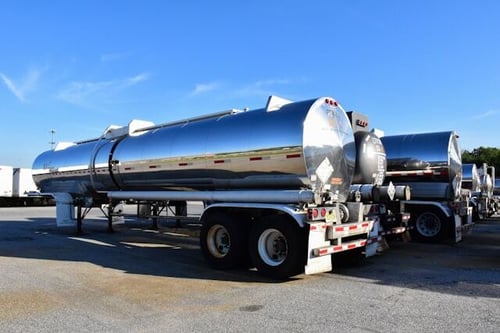
Hazmat Transportation Management: Compliance Guide
Learning how to ship heavy building materials efficiently requires you to get the details right before your freight ever leaves the dock, from accurate weight and dimensions to proper equipment selection and jobsite preparation. This guide covers the key factors that drive cost and risk, explains how to choose between LTL, truckload, and flatbed options, and shows how a Modern 4PL approach can bring consistency to complex, multi-site shipping operations.
Shipping Factors That Drive Cost and Risk for Heavy Building Materials
To ship heavy building materials efficiently, you need to get five things right before the truck ever arrives: accurate weight and dimensions, the correct freight class, secure packaging, the right equipment type, and full disclosure of delivery site conditions. Miss any one of these, and you are looking at surprise charges, damaged freight, or a failed delivery that sets your project back days.
In this post, we will walk through each of these factors, explain how to choose between LTL, truckload, and flatbed options, and show you how to keep costs and schedules under control from quote to delivery.
Shipment Weight and Dimensions
Carriers price freight based on either actual weight or dimensional weight, whichever is greater. Actual weight is what the shipment weighs on a scale. Dimensional weight is a pricing formula that accounts for how much space the shipment takes up relative to its weight.
If your shipment is light but bulky, the carrier will charge you based on dimensional weight instead. Materials that exceed standard trailer lengths also trigger overlength fees. Measuring your freight accurately at the origin is the single easiest way to prevent billing adjustments later.
Freight Class and Density
Freight class is a standardized code assigned through the National Motor Freight Classification system that determines your LTL pricing. The primary factor behind your freight class is density, which is the weight of the shipment divided by its cubic volume.
Heavy building materials like concrete, steel, and stone typically have high density, which usually means a lower and more favorable freight class. But if you declare the wrong class on your bill of lading, the carrier will reweigh and reclassify your shipment. That reclassification results in penalty charges and delays you did not plan for.
Fragile and High-Value Materials
Glass, tile, fixtures, and finished cabinetry need handling codes printed clearly on the freight. Codes like "fragile," "do not stack," and "this side up" tell dock workers exactly how to treat your shipment.
You also need to understand carrier liability limits. Released value is the basic coverage a carrier provides, often just pennies per pound. Declared value lets you state the true worth of the goods for better protection. Either way, photograph your freight before it leaves the origin. Those photos are your strongest evidence if you ever need to file a damage claim.
Hazardous Materials Considerations
Some building materials fall under hazmat regulations. Industrial adhesives, sealants, chemical coatings, and certain treated lumber products may require special classification, labeling, and shipping papers.
Not all carriers accept hazmat freight. You must verify carrier restrictions before booking to make sure your load will not be rejected at the dock.
Pickup and Delivery Accessorials
Accessorials are extra charges for services beyond standard dock-to-dock transportation. Jobsite deliveries almost always trigger at least one of these fees, and failing to disclose them at quote time is one of the most common causes of invoice surprises.
| Accessorial | When It Applies | Why It Matters |
|---|---|---|
| Liftgate | No dock or forklift at site | Adds equipment cost and delivery time |
| Limited access | Construction sites, rural areas | Restricts which carriers can deliver |
| Appointment | Scheduled delivery windows | Requires coordination with site crews |
| Inside delivery | Freight moved past the threshold | Increases labor and liability |
Packaging and Palletization for Heavy Building Materials
Freight networks handle your shipment very differently than a dedicated truck. In an LTL environment, your materials will be loaded, unloaded, and transferred at multiple terminals before reaching the final destination. If your packaging cannot survive repeated handling, your freight will not arrive intact.
- Palletizing: Place materials on standard pallets whenever possible. Distribute weight evenly across the pallet to prevent collapse during stacking.
- Strapping: Use steel or heavy-duty poly strapping to secure materials to the pallet. Always add edge protectors under the straps so the banding does not cut into your product.
- Stretch wrap: Wrap the entire unit tightly for moisture protection and to keep individual pieces from shifting loose during transit.
- Dunnage and blocking: Fill empty spaces with scrap wood or padding to prevent movement inside the trailer. This is especially important for floor-loaded materials like lumber.
- Labeling: Print your bill of lading information, handling instructions, and piece counts on all visible sides of the freight.
- Photos: Capture the condition of every shipment at origin before it goes on the truck. This is your best protection for any future claim.
LTL, Full Truckload, and Flatbed Options for Heavy Building Materials
The right shipping method depends on your shipment size, material type, and what the delivery site can handle. There is no single answer that works for every load. You need to evaluate each option based on cost, transit speed, and how many times the freight will be touched.
LTL Freight for Palletized Shipments
Less-than-truckload shipping combines your freight with other shippers' goods on the same trailer. You only pay for the space you use, which makes it cost-effective for smaller, palletized loads.
The tradeoff is that your freight passes through multiple terminals, increasing the chance of damage. Many LTL carriers also have strict limited access policies and may refuse to deliver to unpaved construction sites. If your jobsite does not have a dock, you will need a liftgate, which adds cost and limits your carrier options.
Full Truckload for High-Volume Deliveries
Full truckload means the entire trailer is dedicated to your freight. The truck picks up at origin and drives directly to the destination with no terminal stops in between.
This is the better choice for large orders, time-sensitive deliveries, and materials that should not be handled more than once. The cost is higher than LTL, but you get faster transit, fewer damage risks, and the ability to schedule delivery appointments around your crew's availability.
Flatbed and Specialized Equipment for Oversize Materials
Lumber, steel beams, precast concrete, and other oversized items often require open trailers. Flatbeds, step decks, and double-drop trailers allow cranes and side-loading forklifts to access the freight directly.
Because the freight is exposed, you must account for tarping to protect against weather. You also need to meet strict load securement rules using chains and binders. Loads that exceed standard weight or dimension limits may require oversize or overweight permits, which add lead time to your planning.
How to Control Shipping Costs for Heavy Building Materials
Most cost surprises come from mismatches between what was quoted and what actually shipped. When you receive a freight invoice that is double your original quote, how do you figure out what went wrong? You trace it back to the data.
- Quote inputs: Provide exact weight, dimensions, freight class, origin and destination zip codes, required accessorials, and pickup dates. Guessing on any of these will result in a billing adjustment.
- Bill of lading accuracy: The data on your BOL must match the quote exactly. Discrepancies trigger reweighs and reclassifications that inflate your final cost.
- Fuel surcharges: Carriers calculate fuel surcharges based on national diesel price averages, and these fluctuate weekly. Factor them into your budget on long-haul moves.
- Freight audit: Compare every invoice against the original rate confirmation. Catching billing errors before you pay them is the simplest way to stop cost leakage.
Working with a logistics partner who audits invoices and manages carrier relationships on your behalf makes this process far more consistent, especially when you are shipping across multiple sites and suppliers.
Shipping Tips That Keep Heavy Building Materials On Schedule
Efficiency is not just about finding the lowest rate. It is about reliability. When a delivery is scheduled for 7 AM and your crew is standing on the jobsite waiting, what is your plan if the truck does not show?
- Appointment scheduling: Coordinate delivery windows with site readiness. If the truck arrives before the site is prepared, you will pay detention charges for the driver's wait time.
- Site preparation: Make sure the right equipment and personnel are available at the exact delivery time. A forklift, crane, or loading dock must be ready before the truck backs in.
- Tracking and visibility: Real-time shipment updates let you communicate proactively with your crews instead of reacting to surprises.
- Delivery inspection: Always inspect freight before signing the proof of delivery. Note any damage, shortage, or overage directly on the paperwork. Once you sign it clean, your claim options shrink dramatically.
- Exception management: Have a clear process for handling delays, damages, or refused shipments so your team knows exactly who to call and what to do.
How Modern 4PL Orchestration Simplifies Heavy Building Materials Shipping
Managing heavy building materials across multiple suppliers, carriers, and jobsites creates complexity that manual processes cannot scale. A Modern 4PL approach acts as an orchestration layer that connects your physical freight execution with supply chain technology in a single, coordinated system.
Instead of juggling dozens of individual carrier relationships or relying on transactional freight marketplaces, an orchestrated model gives you centralized visibility across every shipment, mode, and carrier. You access freight capacity across LTL, truckload, and flatbed without being locked into one network. Your ERP and transportation management systems connect through integration so data flows without manual rekeying.
An open ecosystem approach, like the one Redwood uses, means you can mix and match carriers, technology, and services to build a logistics operation that fits your business. Many building materials shippers have used this model to reduce costs and improve on-time delivery across complex, multi-site networks.
Final Thoughts
Shipping heavy building materials efficiently comes down to preparation: accurate data, proper packaging, the right equipment, and proactive communication at every step. When you control these variables, you reduce cost, prevent damage, and keep your projects on schedule.
If you are managing freight across multiple suppliers and jobsites and the complexity is outpacing your current process, it may be time to explore a more orchestrated approach. Contact Redwood to start the conversation about building a logistics solution that fits how your business actually operates.
Frequently Asked Questions
What documents help win freight damage claims for heavy building materials?
Photos taken at origin, an accurate bill of lading with exact piece counts, and a proof of delivery with exceptions clearly noted create the documentation trail carriers and insurers require to process a claim.
What should a jobsite receiver check before signing a proof of delivery?
Count all pieces, inspect for visible damage on every side of the freight, and write any discrepancies directly on the delivery receipt before signing. A clean signature limits your ability to file a claim later.
How do multi-location shippers keep bill of lading data consistent across sites?
Standardize commodity descriptions, NMFC freight class assignments, and accessorial codes across every shipping location. Consistent data prevents billing variances and makes freight spend reporting far more accurate.
How does system integration improve freight visibility for building materials shippers?
Connecting your ERP, transportation management platform, and carrier systems through API-based integration eliminates manual tracking. Shipment status and delivery confirmation flow automatically, enabling your team to manage exceptions before they impact the jobsite.